Showing posts with label Risk Management. Show all posts

Sunday, June 20, 2010

Milton Friedman, Helicopters and Money Mischief


"There is no subtler, no surer means of overturning the existing basis of society than to debauch the currency. The process engages all the forces of economic law of destruction and does it in a manner which not one man in a million is able to diagnose." - John Maynard Keynes

Inflation classically defined is a rise in the supply of money; Inflation, commonly understood, is a rise in the price of goods and services. It is perhaps this distinction which partly contributes to the mysterious behavior of money, prices and inflation throughout society. Although the distinction of how money affects us personally against how it affects society is what really lies at the heart of monetary mystery and money mischief.


In Money Mischief Episodes in Monetary History, Dr. Milton Friedman writes about various episodes throughout recent history in order to simplify the understanding of the vicissitudes of the monetary phenomena. The first thing to understand about money, no matter what it is (i.e. circular stones, precious metals, pieces of paper or the amount of zeroes on a computer screen), is what the relation of the amount of money has to the price of goods and services throughout an economy. No matter how one may define inflation, Dr. Friedman was correct in stating that inflation is always and everywhere a monetary phenomenon.

As recently mentioned, the classical definition and the common understanding of inflation while seemingly different are actually related. The distinction comes from our personal biases. When the stock of money increases, there is inflation or more appropriately when the rate of money growth exceeds the amount of economic output, there is inflation. This inflation has societal implications. However, what we personally see is a rise in prices. In order to illustrate this distinction, Dr. Friedman brings up a hypothetical community where the average income is $20,000 and the amount of savings is 10%, or 5.2 weeks of their income. Unless mentioned, everything else in this situation is ceteris paribus, all things being equal.

Suppose then one day a helicopter, the helicopter representing a metaphor for the Federal Reserve in the United States, flies over this hypothetical community. The helicopter then drops an amount of money equaling $2,000 per citizen, or the amount of each individual’s savings. What would such an affect be when each individual is now $2,000 richer in nominal terms? Would savings automatically double to an average of cash balances of 10.4 weeks? Probably not as there is no incentive to hold the extra cash balances. In other words, instead of saving, people would spend or consume more. Yet the amount of goods, services and labor has remained equal while the amount of money has increased. The effect of what everyone sees from a personal level is a good one. People have more money to go shopping and businesses have more customers. Yet now is society better or worse off? Initially, the effect will most likely be a lower savings rate in real terms. The reason for this phenomenon is, assuming ceteris paribus, only the nominal values, or the relation between money and prices, have increased. Yet real values have not changed. Assuming this is a onetime event, the most likely outcome will be a similar return to the ex ante position only with higher nominal prices. With more money, consumers will bid up prices and as prices increase, people will save more until savings are back to about 5.2 weeks worth of cash balances. How the transition will play out is anyone’s guess as preferences and prices are always in flux, but society will eventually end up no better or worse off than before.

Suppose now that the helicopter drop is not a onetime event, but rather a continuous event. If such an event occurred, would society better or worse off? Again, from the individual’s point of view, this seems like a bonanza at first. The continuous money growth as real values remain constant will induce more people to spend more and save less. As the amount of credit throughout society increase, people spend more money and businesses are all too happy to cater to more customers. As credit initially increases, the boom begins. This is why business cycles are sometimes referred to as credit cycles. As the inflationary boom continues, more money is spent, less money is saved and customers will continue to bid up prices. Euphoria sets in among the various members of society almost blinding them to what the real prices actually are. Yet real values must eventually come back in line with the effects of the monetary expansion. A bust must necessarily occur to return to the realities of the ex ante world. The bust, a hangover period as some have described it, is period of painful adjustment so that real values can return to equilibrium. Nominal values decrease, unemployment increases and a pain ensues. Society has become worse off.

The primary reason for money mischief as Dr. Friedman pointed out is the distinction between what money means to an individual on the one hand and how the rate of money growth affects society on the other. Dr. Friedman goes through various points in history to illustrate such a point. Episodes such as how the cyanide process increased the global gold supply which was a factor leading to the defeat of William Jennings Bryon in 1896 to how FDR toyed with silver to placate a few powerful Senators. While seemingly insignificant, such a myopic policy had a hand in leading to the triumph of Chinese communists in 1949.

Money and credit are necessary corollaries of economic expansion. That is to say inflation, classically defined, isn’t a bad thing. In fact, it may be desirable to increase the money supply in an effort to ensure the most stable and predictable prices. The challenge is to keep the rate of monetary growth in line with the amount of economic expansion. In the United States, the historical rate of economic expansion has been about three to five per cent. Therefore, should the Federal Reserve keep money growth at a rate of 3% to 5% per annum, stable prices, wages and salaries will be seen over time.

Saturday, June 19, 2010

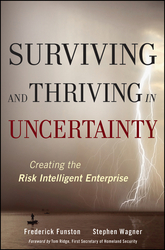
On Risk Management, Creating the Risk Intelligent Enterprise


The following is an Essay on Surviving and Thriving in Uncertainty, a book by Frederick Funston and Stephen Wagner:

After the housing bust and credit crunch of the past couple years, waves of bank failures and home foreclosures followed. Construction and financial services suffered enormously, and mass layoffs followed suit. One of the downfalls that many of today’s companies share is a failure to prepare for risk in the pursuit of reward. As even more recent events have shown, preparing for risk isn’t just limited to finance or construction. The recent tragedy in the Gulf of Mexico has shown that British Petroleum had not prepared well enough for rewarded risk. Also, those who work in the medical profession will have to adjust to the new regulatory environment in exploiting new opportunities.

Frederick Funston and Stephen Wagner argue in their new book, Surviving and Thriving in Uncertainty, that the current understanding of risk management is limited. Commonly understood, risk management secures, protects, insures or otherwise indemnifies people and business against loss. While it is necessary to guard against loss, it is insufficient. All opportunities entail some degree of risk, and this is something that many enterprises often forget. Describing what the authors refer to as the risk intelligent enterprise, they posit that risk must not be separated from value creation.

The authors separate and make a distinction between unrewarded risk and rewarded risk. Unrewarded risk is what we normally think of in risk management. For example, regulatory compliance, IT security, insurance are all examples of unrewarded risk; preparing for such risks protect us from loss. Rewarded risk, on the other hand, has the potential for an upside. Research and development, breaking into new markets and establishing new relationships are all examples of rewarded risk.

Through their years of experience and education, Funston and Wagner devote ten chapters to ten fatal flaws that will do an enterprise in. Each fatal flaw is described in the beginning of the chapter and then is followed by the authors’ recommendation on how the risk intelligent enterprise would best mitigate each flaw. The greatest takeaway that the risk intelligent enterprise must understand is that the enterprise must be disciplined, resources are limited and the future, as well as the opportunities that the future holds, is uncertain and risky.

For example, many Chief Financial Officers lack discipline because they think too much on a short term basis. Indeed, in March 2007, Duke University and CFO Magazine found that more than three quarters of CFOs would sacrifice long-term earnings for a better quarterly report. Such “short-termism” as the authors describe it, can have detrimental effects. Short-termism leads to taking on high risks in the pursuit of immediate earnings. Such high risks often include levering up and holding onto less liquid assets. When such high risk behavior by management goes south, as it often does, the enterprise will find itself struggling to pay its creditors. Defaulting on the creditors will give the enterprise a front row seat in bankruptcy court much to the chagrin of the company’s shareholders.

Another fatal flaw that many enterprises succumb to is a failure to hold on to adequate reserves. A margin of safety is necessary for any enterprise to be resilient enough to withstand any shocks the environment may throw at you. For example, the book mentions that many businesses, in an effort to become quicker, cut costs and become more efficient firms go beyond lean; they become anorexic. The danger is that a firm will not be resilient enough to withstand any complications from risk if it does. Firms must be cognizant of the future when they are deciding on how lean they should be. There is also a danger in holding on to a margin of safety that is too large. Trade-offs to consider are limited inventory space and maintaining a proper degree of cash reserves. Holding on to too much cash will result in opportunity costs. That is to say an enterprise will forego expanding output, hiring new people and pursuing value creation in lieu of holding onto more cash.

Management should set proper time horizons on attaining their goals. Such timelines shouldn’t necessarily be strict, but management should be disciplined enough follow through on prescribed goals within a reasonable timeframe. Understanding that the future is uncertain and the pursuit of value contains risk should help direct the decision making of all those within the risk management enterprise on how to best deploy limited resources.

The book concludes on ideas on how to best organize a risk intelligent enterprise. So long as management and risk managers are willing to recognize and challenge their assumptions, the costs of employing a risk intelligent enterprise are rather inexpensive. Indeed Funston and Wagner dedicate a whole chapter in arguing that risk intelligence is free. For instance, in his essay, “Risk Management” Joe Nacera describes a situation where risk management need not cost anything. Nacera mentions that the leadership at Goldman Sachs had noticed problems in their value at risk (VaR) model. Due to the problems of the VaR model, Goldman Sach’s senior management made a conscience decision to change course. In Goldman’s pursuit of value, they began to shift out of mortgage backed securities (MBS) as early as 2006. When the crisis hit two years later, Goldman Sachs was able to weather the storm better than its competitors. Such risk intelligence by Goldman Sachs’ leadership didn’t cost anything, but saved them billions. Furthermore, the firm was able to deploy resources that resulted in further value creation for its shareholders.

Without the proper mindset towards risk management, firms will find themselves struggling. The creation of value should never just be assumed. Rather, risk should always be associated with opportunities and value creation. Firms that fail to recognize the relationship between risk and reward, such as Lehman Brothers or British Petroleum, will either struggle or find themselves out of business. Firms that understand the relationship and strike the right link, like Goldman Sachs, will not only survive, but they will thrive in a world of uncertainty.

More on this topic:

Funston, Frederick, and Stephen Wagner. Surviving and Thriving in Uncertainty: Creating the Risk Intelligent Enterprise. Hoboken, N.J.: Wiley, 2010. Print.

Nocera, Joe. "Risk Management." The New York Times Magazine. 2 Jan. 2009. Web. 18 June 2010.

< http://www.nytimes.com/2009/01/04/magazine/04risk-t.html>.

Pfaendler, Shelly “How to Get Smart About Risk Management.” Wall Street Journal, 12 Apr. 2010. Web. 18 June 2010. < http://online.wsj.com/article/PR-CO-20100412-904275.html>.

Duke University and CFO Business Outlook, “Survey: CFO Outlook Improves; Capital Spending, Hiring Expected to Increase,” Office of News and Communication, Duke University and CFO Business Outlook, 7 March 2007,